
"Religion should remain within the four walls of your home. A Hindu identifies as a Hindu only when Muslims take to the streets or during riots; otherwise, Hindus are divided by caste," he said.

Tamil Nadu Governor R N Ravi has sparked controversy by asking students at a government-aided college in Madurai to chant "Jai Shri Ram". The State Platform for Common School System-Tamil Nadu (SPCSS-TN) has demanded his removal, alleging that he violated his oath of office and secular principles. The group claims Ravi's actions were against the Constitution, which outlines India as a secular country and emphasizes the importance of upholding secular values in education. The incident follows a recent Supreme Court ruling that overruled Ravi's decision to withhold 10 Bills passed by the Tamil Nadu government, highlighting ongoing tensions between the Governor and the state administration.
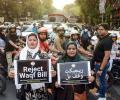
The Congress party announced its intention to challenge the constitutionality of the recently passed Wakf (Amendment) Bill, 2024 in the Supreme Court. AICC general secretary Jairam Ramesh stated that the party will "very soon" file a petition, citing concerns about the bill's impact on constitutional principles. Ramesh highlighted the Congress's ongoing legal challenges against other legislation, including the Citizenship Amendment Act (CAA), amendments to the Right to Information (RTI) Act, and changes to the Conduct of Election Rules. He emphasized the party's commitment to defending the Constitution's principles, provisions, and practices.

Budget 2025-26 delivers a carefully calibrated strategy-stimulating demand and investment while keeping fiscal discipline intact. In an environment marked by global trade disruptions, and a softening in urban consumption, Finance Minister Nirmala Sitharaman has taken a measured approach.

'Presumption of innocence must guide all formal actions, but transparency must not be mistaken for pre-judgment.' 'The cruel irony, however, is that Justice Varma is a fine judge who enjoys a reputation for writing well-reasoned judgments.'

Kirsty Coventry's journey from the Olympic podium to the highest office in sport has been marked by excellence, resilience, and reform.
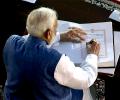
The biggest challenge will be to convert his regime into a coalition of minds. But given the fact that he is instinctively an authoritarian leader and supporter of the hard Hindutva line, the survival of his government will depend on his ability to balance between his heart and mind, between instinct and pragmatism, asserts Nilanjan Mukhopadhyay, author of Narendra Modi: The Man, The Times.
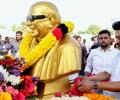
This article traces the history of the DMK's fight for state autonomy, beginning with C.N. Annadurai's advocacy in the 1960s and culminating in M. Karunanidhi's resolution in the Tamil Nadu Assembly in 1974. The article highlights the key figures involved, the arguments presented, and the impact of the Rajamannar Committee Report.
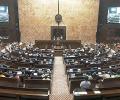
President Droupadi Murmu has given her assent to the Waqf (Amendment) Bill, 2025, which has sparked controversy and legal challenges. The Bill, passed by Parliament after heated debates, has been criticized by opposition parties as "anti-Muslim" and "unconstitutional". The government, however, maintains that the reform will benefit the Muslim community. Several petitions have been filed in the Supreme Court challenging the constitutional validity of the Bill, alleging discrimination against Muslims and undermining their religious autonomy. The Bill repeals the Mussalman Wakf Act, 1923, and introduces restrictions on Waqf properties and their management, which have raised concerns about the impact on the Muslim community.

Rediff reports on the reasons behind this dramatic shift.
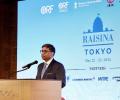
India's Foreign Secretary Vikram Misri has underscored the importance of not equating the victims and perpetrators of terror attacks, highlighting the need for global unity in combating terrorism. Speaking at Raisina Tokyo 2025, Misri expressed appreciation for Japan's support following the recent terror attack in Pahalgam, India. He also cautioned against the trend of some Western countries hyphenating India and Pakistan in the context of their recent military confrontation. Misri further outlined India's economic aspirations and its commitment to becoming a factor of stability in a turbulent world.

The United Progressive Alliance plans to take advantage of the exit of the Left from its governing partnership to move swiftly on next-generation reforms like 100 per cent foreign direct investment in telecom services.

Lee Jae-myung's decisive victory in South Korea's snap presidential election marks a major political shift driven by public backlash against authoritarian, with significant implications for domestic reform and the future of the US-South Korea alliance, observes Dr Rajaram Panda.
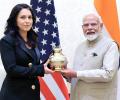
The US spy chief, now in India, earlier on Monday said the "longtime unfortunate persecution, killing, and abuse of religious minorities like Hindus, Buddhists, Christians, and others has been a major area of concern for the US government and President Trump and his administration."
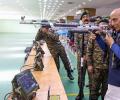
India has declared 2025 as the year of defence reforms, aiming to establish integrated theatre commands to enhance synergy among the three armed forces and transform the military into a technologically-advanced combat-ready force. The reforms will also focus on streamlining acquisition procedures, promoting collaboration, and leveraging emerging technologies like artificial intelligence and robotics.
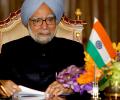
Hailed as the architect of India's economic reforms, former prime minister Manmohan Singh in one his last interviews had said in 2019 that the country's economy was 'over-regulated', the government exerted control and interferences were aplenty with even regulators having 'morphed into controllers'.

Dalal Street minnows stole the show in 2024, giving handsome returns to investors, helped by a largely optimistic trend in the stock market and impressive retail investors' participation. Analysts attributed the positive trend in the equity markets, where the benchmark indices shattered many records this year, to robust domestic liquidity, strong fundamentals of the Indian economy, and policy continuity.

Several multinational medical device makers are focusing on deepening their presence in India by expanding their local manufacturing footprint and research capabilities, a move that can catapult India into a strategic hub for the medical technology (medtech) industry. Among those increasing their reach in the country are Siemens Healthineers and Philips, signalling a broader shift from India being only a sales destination to becoming a global production and innovation base.
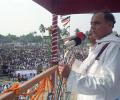
A new book by former West Bengal governor Gopal Krishna Gandhi claims that former chief election commissioner T N Seshan proposed an immediate halt to the general election process after Rajiv Gandhi's assassination in 1991 and even offered to become home minister. Gandhi, who was joint secretary to then president R Venkatraman, writes that Seshan was the one who broke the news of the assassination to the president and arrived at the Rashtrapati Bhawan "super-fast" that night. According to Gandhi's account, Seshan told Venkatraman that he felt the election process needed to be stopped and that he was ready to take on the role of home minister if necessary. However, Prime Minister Chandra Shekhar and Cabinet Secretary Naresh Chandra assured the president that the situation was under control and that there was no need to pause the election process. Seshan's suggestions were ultimately ignored, but he did manage to postpone the second and third phases of polling.

'...an hour before he was hanged from the film Badal, 'Apne liye jiye toh kya jiye'... 'I saw eight hangings -- Ranga and Billa, Maqbool Bhat, Kartar Singh and Ujagar Singh (Dr N S Jain murder case), Satwant Singh and Kehar Singh (Indira Gandhi assassination case) and Afzal Guru.'
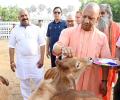
Uttar Pradesh Chief Minister Yogi Adityanath, known for his hardline Hindutva views and 'bulldozer justice' approach, has spoken out about his policies toward Muslims, the Waqf board, and his vision for India. He asserts that Muslims will receive a fair share of development in Uttar Pradesh, but not special concessions. He also criticizes the Waqf board for its alleged appropriation of government properties and calls for its reform. Adityanath defends his 'bulldozer justice' policy, claiming it is necessary for infrastructure development and removal of encroachments. He also discusses his vision for India, emphasizing the importance of Hindi as a national language and the need for unity across different linguistic groups.

'When Prime Minister Modi met President Trump, they agreed to initiate a bilateral trade dialogue.' 'It makes sense to give these negotiations a chance.'

At the PMO, policies are framed by factoring in analytical perspectives, implications, sustainability, and other dimensions.

Finance Minister Nirmala Sitharaman on Saturday said Rs 1.5 lakh crore will be provided towards 50-year interest free loans to states, for infrastructure development. Also, an asset monetisation plan will be launched for 2025-30 period to infuse Rs 10 lakh crore capital in new projects.
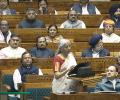
The fiscal deficit for FY25 has been pegged at 4.8 per cent of GDP and at 4.4 per cent for FY26, Finance Minister Nirmala Sitharaman said on Saturday. Presenting the Budget 2025-26, she said net market borrowings are estimated at Rs 11.54 lakh crore for next fiscal year.

Singapore's long-ruling People's Action Party (PAP), led by Prime Minister Lawrence Wong, has secured a landslide victory in the country's general election. The PAP won 87 of 97 seats, with voters endorsing the party's focus on stability and economic security amidst global uncertainties. Wong expressed gratitude for the strong mandate and vowed to tackle concerns about the cost of living and housing. The results mark a significant win for the PAP, which has been in power since Singapore's independence in 1965.
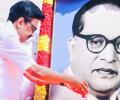
Given the possibilities that next year's assembly elections could throw up, Stalin told the state assembly that an interim report had to be submitted by January 2026. The outcomes may well find its way into the DMK's poll manifesto, thus seeking to keep the electoral focus still on the BJP-ruled Centre and Prime Minister Modi, observes N Sathiya Moorthy.
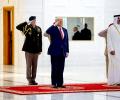
'He is intrigued by the intractability of Kashmir issue. With his interest in dealmaking and peacebrokering, he sees it as an exciting challenge to tackle.'
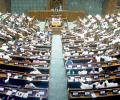
Introducing the bill, Rijiju said the consultation process of the Joint Parliamentary Committee (JPC) was the largest ever exercise carried out by a parliamentary panel in India's democratic history.

Congress leader Rahul Gandhi has said he is "more than happy" to take responsibility for everything wrong the party did in its history, including the 1984 Sikh riots. He acknowledged that the party made "a lot of mistakes" when he was not there, but said he has publicly stated that what happened in the 80s was "wrong." The remarks were made during an interaction at Brown University in the US. The video of the interaction was uploaded on the YouTube channel of the Watson Institute for International and Public Affairs on Saturday. The BJP has criticized Gandhi for his remarks, accusing him of "ridiculing" the beliefs of Hindus and Sikhs.
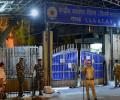
Delhi Chief Minister Rekha Gupta announced plans to relocate Tihar Jail to the city's outskirts, allocating Rs 10 crore in the 2025-26 budget for survey and consultancy services related to the move. The decision comes amid severe overcrowding at the prison complex, which currently houses over 19,000 inmates despite being designed for approximately 10,025. The Delhi government has also initiated the development of new prison complexes in Narela to alleviate congestion. While a short-term proposal for retrofitting and vertical extension of the jail has been made, the chief minister did not disclose any date for the shifting plans. Additionally, the government will prioritize procurement of products manufactured by inmates in Tihar, Rohini, and Mandoli jails, aiming to boost their earnings and provide them with better opportunities for rehabilitation.
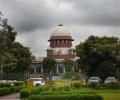
The Supreme Court of India has directed the Odisha government to decide within six weeks on a plea for remission filed by Ravindra Pal alias Dara Singh, who is serving a life sentence for the murders of Australian missionary Graham Stuart Staines and his two sons in 1999. Singh, who has spent over 24 years in prison, claims to have "repented" his actions and seeks an opportunity to reform his character. The court issued the notice after Singh argued that he has already served more than the required period of sentence and that his right to liberty is being jeopardized by the delay in processing his plea.

Deposed Bangladesh Prime Minister Sheikh Hasina has issued a strong warning against threats to ban her Awami League party, calling the demands "audacious" and accusing Nobel laureate Professor Muhammad Yunus of being a "fraud" and "corrupt" for his role in the current interim government. Hasina, who fled Bangladesh in August 2024 following a student-led uprising, claims Yunus assumed power through a "meticulous design" with funding from overseas and misled students and people. She asserts that her Awami League is the legitimate party, with a strong history of fighting for the people's rights, and accuses Yunus and his supporters of having no constitutional basis or people's mandate to rule the country.

Quraishi asserted that India has, is and will always stand up and fight for its constitutional institutions and principles.
Parliament's approval of the Waqf (Amendment) Bill, a contentious piece of legislation aimed at reforming Waqf bodies, has sparked strong reactions from the opposition, who allege that the bill was "bulldozed" through Parliament. The bill, considered the government's most consequential legislation in its third term, was passed with comfortable majorities in both the Lok Sabha and Rajya Sabha despite opposition claims of a lack of consultation and an intrusion into religious affairs. Other notable bills approved during the session included the Finance Bill, Appropriation Bill, Immigration and Foreigners Bill, and Tribhuvan Sahkari University Bill. The session, which saw high productivity, also witnessed debates on issues such as economic distress, delimitation, and the three-language policy. While the government touted its achievements, the opposition criticized the government's approach and vowed to challenge the Waqf bill in court.

Prime Minister Narendra Modi met SpaceX CEO Elon Musk in Washington on Thursday. US President Donald Trump has chosen Musk to head a new Department of Government Efficiency (DOGE) last month. Musk arrived at Blair House with his three young children, who were sitting with Musk when he met Modi. Earlier, Modi met US National Security Advisor Michael Waltz. The meeting with Waltz was the first engagement of the day. External Affairs Minister Dr S Jaishankar and NSA Ajit Doval were also present at the meeting. Modi arrived in the US capital Wednesday evening for a bilateral meeting with President Trump. After arriving at Blair House, the President's Guest House, Modi met the US Director of National Intelligence Tulsi Gabbard. Just hours before her meeting with Modi, Gabbard took the oath of office as the 8th Director of National Intelligence in the presence of Trump.

President Trump with his MAWA has unwittingly provided us this opportunity. Will PM Modi grasp this and leave a legacy of an ushered in scientific and technological revolution in India, asks Colonel Anil A Athale (retd).

Many were hoping that with Vajpayee's NDA gone, there would be a return to the Congress normal. Nobody was prepared for the opposite. Sonia Gandhi was sceptical. This became the only issue over which Manmohan Singh took on his party bosses and risked his government. Politically, it was riskier than the 1991 reform, recalls Shekhar Gupta.
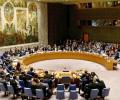
Pakistan was waiting for an opportunity to bring the Jammu and Kashmir issue to the global agenda and resorted to the terrorism route to provoke India, observes Ambassador T P Sreenivasan.
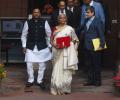
Finance Minister Nirmala Sitharaman on Saturday unveiled 'transformative' tax reforms that ranged from a simpler income tax law to higher TCS threshold for remittances and income tax benefits for middle class.
 © 2026 Rediff.com - Advertise with us - Disclaimer - Privacy Policy - Sitemap - Feedback - About us - Terms of use - Grievances